Challenge
The client’s logistics management platform had been running on an outdated monolithic architecture that no longer met the company’s growing operational demands. Over time, performance degraded, updates became increasingly risky, and integrations with new tools, such as cloud analytics or fleet tracking, were impossible without significant manual work.
The system’s limited scalability also made it difficult to process higher shipment volumes, while inconsistent data synchronization between modules caused billing errors and delayed delivery reporting. The client needed a way to modernize their platform without pausing active logistics operations, ensuring data integrity, compatibility with existing infrastructure, and measurable performance improvements.
Key challenges:
- No clear process for automated testing or continuous deployment
- Outdated .NET framework and monolithic architecture limiting scalability and integrations
- Slow system performance during peak shipment processing periods
- Frequent data inconsistencies between order tracking and billing modules
- Lack of real-time analytics and visibility into operational metrics
- High maintenance costs due to legacy code dependencies
- Limited support for API-based integrations with modern logistics tools
- Manual report generation slowing down decision-making
- Risk of data loss during system updates or server migrations
Solutions
Our goal was to modernize the client’s legacy logistics system without disrupting active freight operations. We started by analyzing the existing monolithic .NET codebase and gradually transitioning it to a microservices architecture hosted on AWS, ensuring stable performance and scalability.
Modernization included rebuilding the core modules for order processing, billing, and route tracking using .NET, Node.js, and PostgreSQL while introducing new APIs for smooth data exchange between systems. A React-based web interface replaced the outdated frontend, giving dispatchers and accountants a faster, more intuitive workspace.
To improve data integrity and reliability, we implemented automated testing through TestRail and Jira, set up CI/CD pipelines, and introduced monitoring tools for proactive maintenance. The project also added real-time analytics dashboards powered by Python, helping managers identify shipment delays, cost overruns, and route inefficiencies instantly.
Implemented solutions:
- Established continuous system monitoring to detect and resolve issues early
- Migrated monolithic architecture to modular, cloud-based microservices on AWS
- Rebuilt core logistics and billing modules using .NET and Node.js for better maintainability
- Developed REST APIs for seamless integration with third-party analytics and tracking tools
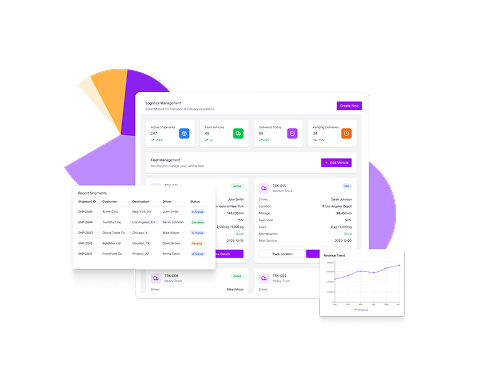
- Replaced outdated frontend with a responsive React interface for dispatch and billing teams
- Added automated test coverage and CI/CD pipelines for faster, safer deployments
- Implemented real-time analytics dashboards for shipment status and cost tracking
- Optimized PostgreSQL data structure to improve query speed and reporting accuracy
- Integrated Docker-based containers for isolated, reliable environment management