


Fitness App Development Guide: How to Create a Fitness App in 2026
The most successful fitness apps are often born from the most ordinary moments: a personal trainer whose clients keep asking for workout directions in between sessions, a gym owner who notices an increase in online fitness engagement and wants to monetize it, or a wellness influencer who wants a new way to connect with followers.
Modern digital solutions give users a comprehensive way to keep their health, wellness, and fitness routines, plans, and goals in one place. This is the perfect fit for people who just want to stay consistent in their lifestyle management without juggling multiple different apps or thinking too hard about the technology behind them.
At the same time, building a five-star fitness solution does not automatically guarantee recognition and profitability — it depends as much on the idea as it does on the execution and even post-release activities. Today, we are going to talk about how to develop a fitness app and turn a concept into the market’s next success story.
Key Takeaways
- Fitness apps work best when they fit naturally into daily routines instead of trying to do everything at once.
- Mobile apps are the most natural platform choice for fitness products because workouts and tracking happen on the go.
- Fitness apps that are easy to use and to return to tend to keep users engaged longer.
- AI-assisted development helps reduce build time without removing human control over quality and structure.
- Development cost is influenced by early choices more than by technology itself.
- In fitness solutions, monetization works best when it supports progress instead of blocking it too soon.
- Fitness apps that improve steadily over time usually last longer than those built mainly for big launches.
Why Is Now the Perfect Time to Build a Fitness App?
Fitness apps are no longer experimental products or short-term trends. They have become a stable part of how people approach health, workouts, and daily routines, which makes this moment especially favorable for launching a new fitness application.
The growth of the digital fitness industry
The latest numbers point to sustained demand rather than a temporary spike. The global fitness app market was valued at over $12 billion and is projected to more than double over the next decade, powered mainly by mobile usage and subscription-based models.
Additionally, fitness apps generated nearly $4 billion in revenue in 2025 with hundreds of millions of downloads worldwide, showing that users are willing not only to install fitness apps but also to pay for ongoing access and premium features.
The shift towards better health and fitness habits
The business potential of fitness mobile app development in 2026 doesn’t just come from the industry revenue numbers. These days, the interest in health and fitness has moved beyond gyms and short-term programs.
People increasingly rely on mobile apps to support daily activity, structured fitness routines, nutrition tracking, and progress monitoring. Smartphones, fitness trackers, and smartwatches now work together with fitness apps to support long-term fitness goals, not just occasional workouts. This means that mobile-first fitness solutions now effortlessly fit into people’s everyday lives rather than demanding major lifestyle changes.
Continued success of health and fitness apps
Well-known fitness apps such as MyFitnessPal, Strava, and Peloton demonstrate how digital fitness products can scale, retain users, and build sustainable revenue streams. These platforms show that a clear focus, strong user experience, and consistent updates can turn a fitness app into a long-lasting product rather than a short-lived fad.
We’ll turn your product idea into a profitable five-star application


Creating a Fitness Application: From App Idea to a Successful Fitness Solution
Creating a fitness application starts long before the first design screens or software development decisions emerge. The process begins with understanding how the app fits into real fitness routines and what role it plays in supporting them. A clear app idea helps turn an abstract concept into a fitness solution that people actually return to, rather than one they download once and forget.
Starting with a clear fitness app idea
A strong fitness app idea is not about doing everything at once. It focuses on one main outcome and builds around it. That outcome might relate to daily movement, structured workouts, habit tracking, or long-term fitness goals.
At this stage, it helps define:
- The main activity the app supports
- The type of fitness journey it follows
- The fitness levels it should work for
- The role the app plays in a daily routine
This early clarity shapes everything that comes next.
Turning an idea into a usable fitness solution
Creating a fitness application is less about features and more about structure. The most effective fitness solutions keep the experience simple while supporting consistency over time.
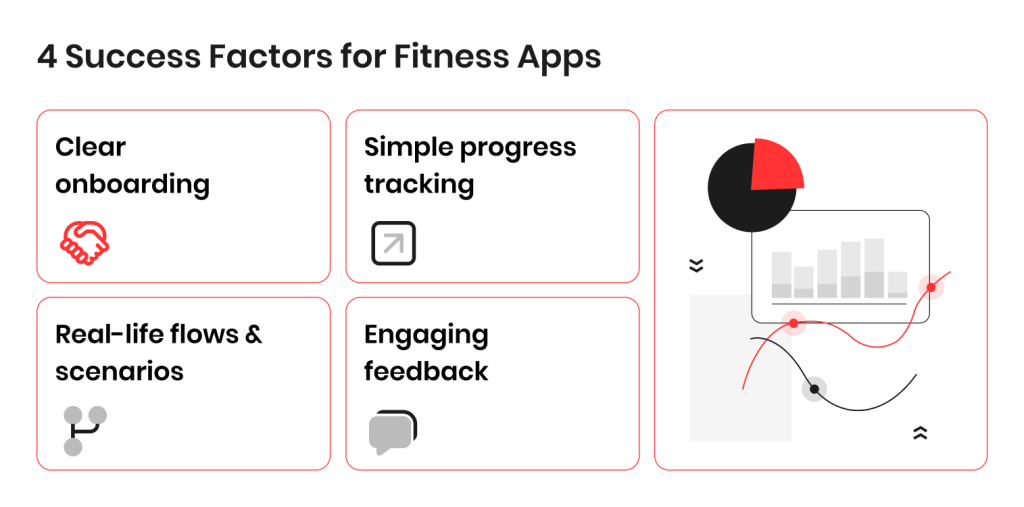
Key elements of prolonged success often include:
- Clear onboarding without long forms
- Simple progress tracking tied to fitness goals
- Workouts or routines that fit real schedules
- Feedback that feels helpful, not overwhelming
A fitness app that feels easy to return to often performs better than one packed with advanced options.
Keeping scope realistic from the beginning
Many fitness apps try to copy large platforms too early. That usually leads to higher development costs and slower progress. A more practical approach is to focus on a narrow set of app needs first, then expand later.
A successful fitness solution is not defined by how many features it has, but by how naturally it fits into everyday health and fitness habits.
Key Types of Fitness Apps in 2026
The fitness app market is no longer dominated by one format. Many fitness apps now focus on specific aspects of fitness rather than trying to cover everything at once. This specialization makes it easier to stand out in a competitive fitness app market. Here are the most popular types of fitness and wellness applications users go for in 2026.
Workout and training apps
These are the most recognizable fitness and workout apps. They guide users through structured fitness routines, often with video instructions, timers, and progress tracking.
Examples include:
- Strength training programs
- Home workout plans
- Gym workout app development solutions
- HIIT or yoga-focused apps
This category also includes apps built around specific formats, such as an app like Peloton that combines guided sessions with community features.
Personal trainer and coaching apps
Personal trainer app development focuses on building closer relationships between trainers and fitness app users. These apps often include:
- Customized workout plans
- Messaging or feedback features
- Progress dashboards
- Subscription-based access
They work well when supporting long-term fitness goals and structured guidance.
Nutrition and habit-focused apps
Not all fitness apps center on exercise. A nutrition app or habit-tracking fitness application can support:
- Calorie tracking
- Meal planning
- Hydration reminders
- Sleep and recovery monitoring
Many successful fitness apps combine workout and nutrition elements to create a more comprehensive fitness experience.
Community and challenge-based platforms
Some fitness platforms focus on motivation through competition and shared progress. Leaderboards, group challenges, and social sharing can increase engagement and retention. And this right here may be one of the keys to success for custom fitness apps. From everything we’ve seen, solutions that blend personalization with community features tend to perform well in the fitness market.
Any platform, feature scope, and tech stack — our mobile development expertise knows no limits

Core Fitness App Features to Consider
Fitness apps succeed when their features support daily use without adding unnecessary complexities. Instead of trying to cover every possible function, many successful fitness apps focus on a small set of features that support consistency and progress.
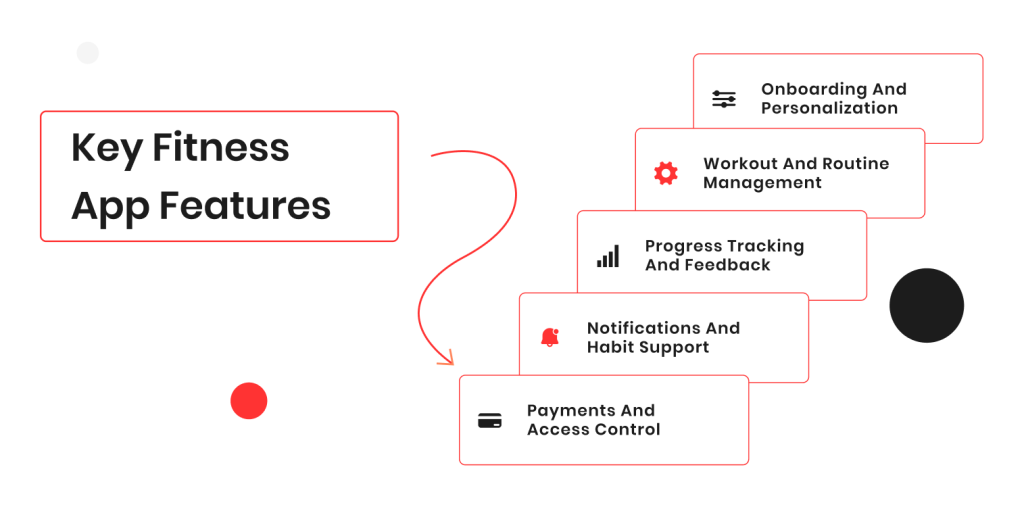
Onboarding and personalization
A fitness application usually starts with basic inputs that help shape the experience from the first session. This may include fitness levels, preferences, available equipment, or general fitness goals.
Effective onboarding is:
- Short and easy to complete
- Focused on essentials
- Flexible enough to adjust over time
This creates a smoother entry into the fitness journey.
Workout and routine management
At the core of most fitness apps are workouts or routines. These features help users understand what to do next without confusion.
Common elements include:
- Guided fitness routines
- Exercise instructions or short videos
- Timers and rest intervals
- Simple completion tracking
Clear structure matters more here than advanced complexity.
Progress tracking and feedback
Progress tracking helps fitness app users stay motivated. This does not need to be overly detailed to be effective.
Typical tracking features include:
- Completed workouts
- Streaks or consistency indicators
- Basic performance metrics
Some fitness apps also connect with fitness trackers and smartwatches to pull activity data automatically.
Notifications and habit support
Reminders play a quiet but important role. Well-timed notifications support regular use without becoming intrusive.
Examples include:
- Workout reminders
- Recovery or rest suggestions
- Encouragement after missed sessions
Payments and access control
If app monetization is planned, features like subscriptions or paid programs need to feel simple and transparent. It’s important to keep in mind that smooth access control often improves retention more than aggressive pricing tactics.
Choosing the Right Mobile Approach to Create a Fitness App
Most fitness apps live on mobile devices for a simple reason: fitness routines rarely happen at a desk. Phones are nearby during workouts, walks, gym sessions, or daily activities, which makes mobile apps the most natural format for fitness solutions.
Why do mobile apps work best for fitness solutions?
Compared to browser-based products, mobile apps support habits that rely on frequent, short interactions. Fitness apps often need to work even when the connection is unstable or when users are mid-workout.
Mobile apps make it easier to:
- Send reminders and progress updates
- Store workouts for offline access
- Connect with fitness trackers and smartwatches
- Collect movement or activity data in real time
For many fitness applications, these capabilities are not optional extras but part of the foundation.
One platform or multiple platforms?
When teams build a fitness app, one early choice is whether to focus on a single platform or support several at once. This decision affects development time, development cost, and future growth.
A focused approach often:
- Shortens the initial build phase
- Keeps scope manageable
- Makes early testing simpler
Expanding later is usually easier when the app is built with growth in mind from the start.
Custom fitness apps vs. working with generic templates
Some fitness apps rely heavily on templates or no-code tools. While these can speed up early experiments and help quickly create a proof of concept to test out a product idea, they often limit personalization, performance, or future feature expansion.
Custom fitness apps, in turn, offer more space to implement the desired functionality and design elements, as they are structured around:
- Specific fitness routines or methods
- Clear app needs and usage patterns
- Long-term flexibility
Choosing the right mobile approach early helps avoid rework later and keeps the development journey predictable, especially as fitness apps grow in complexity.
MVP development for a mobile eHealth solution: New project by QArea

How to Develop a Fitness App: The Full Development Process
Fitness app development is a process that follows a sequence of decisions rather than a single technical task. A clear, measured approach helps turn an initial concept into a working fitness application and bring your fitness app idea to life without unnecessary delays or inflated development costs. Here are the steps involved in fitness and health app development.
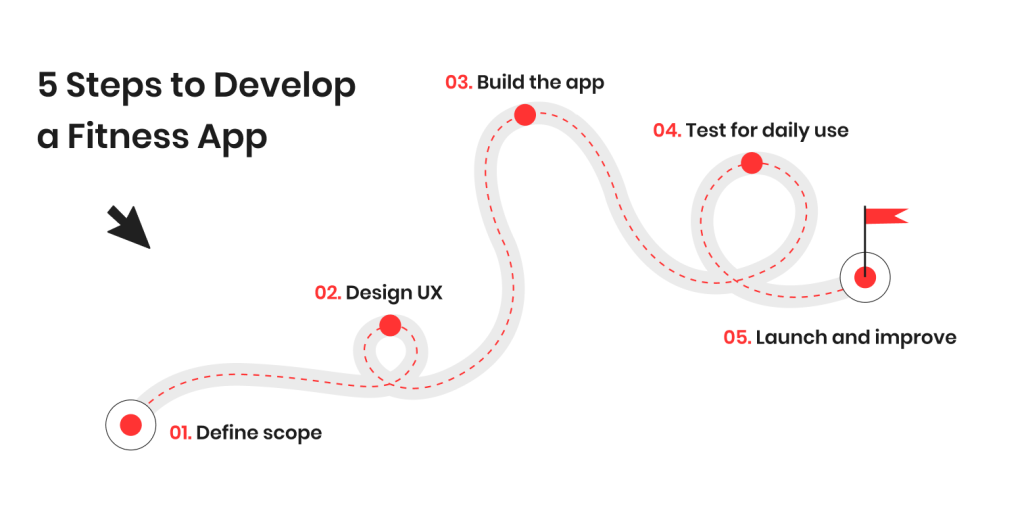
1. Defining scope before development begins
The first stage focuses on deciding what the fitness app should deliver at launch. This includes core fitness routines, basic user flows, and the minimum set of app features needed to support daily use. A focused scope keeps the development journey manageable and avoids early overcomplication.
2. Designing the experience around real use
Design is about how the app feels during workouts and daily check-ins. In fitness apps, clarity matters more than visual complexity. Navigation, readability, and simple interactions help users stay focused on their fitness goals rather than on learning how the app works.
3. Building the application architecture and logic
During development, the app is built around workout logic, data handling, and performance requirements. Fitness mobile app development often includes notifications, progress tracking, and optional integration with fitness trackers. AI-assisted software development tools can speed up routine work while experienced engineers oversee structure, quality, and security.
4. Testing for everyday reliability
Testing checks whether the fitness application works well under regular use. This stage focuses on stability, basic performance, and data handling across common devices. For fitness apps used daily, reliability is more important than advanced functionality.
5. Launching and improving over time
After release, real usage shows what works and what needs adjustment. Successful fitness apps continue improving based on actual behavior, not assumptions. A structured development process makes it easier to refine the product without rebuilding it from scratch.
Smarter Ways to Approach Fitness Application Development in 2026
Fitness application development in 2026 looks very different from the way it did even a few years ago. The biggest change is not a new platform or device, but how fitness apps are built behind the scenes. Development has become faster, more flexible, and more accessible thanks to smarter use of tools and technologies combined with experienced human oversight. Here is what a balanced approach to building and supporting your fitness app currently looks like.
What does smarter development really mean?
Smarter development does not mean skipping planning or relying on automation alone. It means using modern tools to reduce manual effort where it makes sense, while keeping core decisions in human hands. In fitness apps, this approach helps teams move from idea to working product without long delays or repeated rebuilds.
AI-assisted workflows are now part of everyday software development. They help speed up routine coding tasks, generate early versions of app flows, and support quicker adjustments as ideas take shape.
Where does AI make a difference?
In fitness mobile app development, speed often matters as much as functionality. AI-supported tools make it easier to prototype workout logic, adjust app features, and test changes without slowing the entire process. This is especially useful for fitness apps that need frequent updates, new routines, or small refinements based on user behavior. Teams can also integrate advanced tools like Kling AI for video creation to generate high-quality workout demonstrations and visual content that enhance user engagement. The result is a smoother path from concept to usable product.
Why does human expertise remain essential?
Even with all the modern tools available, fitness apps still rely on solid technical foundations. Decisions around application structure, data handling, privacy, and performance cannot be automated safely. These areas influence how the app behaves as usage grows and how well it supports long-term health and fitness use. Experienced engineers remain responsible for these decisions, ensuring that the app is stable, secure, and ready to expand.
What does this change for new fitness apps?
Smarter development lowers barriers that once made fitness app projects feel complex or expensive. It shortens development time, reduces unnecessary rework, and makes it easier to focus on what truly matters: a clear fitness solution that works well in daily life. This makes a crucial difference in why building a fitness app today feels more realistic than it did in the past.
Build great products for less with AI-powered software development

How Much Does It Cost to Build a Fitness App?
We have already talked about the features users want to see in their fitness solutions, the steps it takes to create your own fitness app, and how to make a fitness app without missing out on software quality, functionality, or security. But how much does it cost to develop a fitness app in 2026? Let’s find out.
Which factors impact the development cost?
The cost to build a fitness app can look confusing at first glance. Numbers shared online often range from surprisingly low to unrealistically high, which makes it hard to understand what actually drives the price. These are key factors that can all influence the final cost of the app:
- Feature scope. A fitness application with basic workouts, progress tracking, and simple routines costs significantly less than one that includes live sessions, advanced analytics, or social mechanics.
- Platform coverage. Building for a single mobile platform usually requires less development time than supporting multiple platforms from the start.
- Design depth. Clean, functional design is less costly than highly customized interfaces, animations, or branded visual systems.
- Data handling and integrations. Connecting fitness apps to fitness trackers, smartwatches, or external services adds both development time and testing effort.
- Scalability requirements. Apps built with long-term growth in mind may cost slightly more upfront but reduce rework and expenses later.
How much does traditional fitness mobile app development cost?
Across the fitness app market, many projects fall into broad pricing brackets. When it comes to traditional development, simple fitness apps often start around the low five figures, while more complex products can easily exceed $50,000 or even $100,000 when custom features, long development cycles, and large teams are involved. Higher costs also come from extended build times, repeated revisions, or building too much too early.
How smarter development changes the pricing
Modern fitness app development relies more on AI-assisted software development tools than even in the past few years. These tools, as well as vibe coding, help reduce manual effort, speed up early builds, and shorten feedback cycles. When used correctly, they lower development cost without lowering quality.
This approach makes it possible to build a focused fitness app — with solid structure, essential features, and room to grow — for around $10,000, provided the scope is clear and priorities are set early.
Cost as an ongoing consideration
It’s also important to view costs beyond the initial release. A fitness app that is built cleanly is easier to extend, improve, and support over time. Lower upfront cost combined with a predictable development journey often leads to better results than a large one-time investment with unclear outcomes.
App Store Readiness and Optimization: How to Make Your Product Shine in the Fitness App Market
Launching a new fitness solution does not end when the app is built. App store readiness plays a major role in whether fitness apps are discovered, downloaded, and eventually trusted. Many good products struggle simply because this step is treated as an afterthought.
What do app stores look for in the first place?
Both the Apple App Store and Google Play apply basic quality checks before approving a fitness application. These checks focus on stability, clarity, and user safety rather than advanced functionality.
At a bare minimum, the app needs to:
- Run without crashes during normal use
- Clearly explain what it does on the store page
- Request only necessary permissions
- Handle user data responsibly
Presenting the app clearly in the store
App store optimization is not about tricks. It is about making sure the app description matches the real experience. Fitness app users tend to scan quickly and decide fast.
Clear store pages usually include:
- A short explanation of the purpose and functionality
- Screenshots that show real screens, not concepts
- A focus on outcomes, not feature lists
Overpromising often leads to poor reviews, even if downloads are strong.
Is your app store-ready? A practical checklist
A successful release of a new fitness app requires full compliance with app store rules. Here is how to make sure your product is ready for that step.
| Aspect | Why it matters |
| App description | Sets expectations and builds trust |
| Screenshots | Help users understand value in seconds |
| Privacy notes | Important for health and fitness apps |
| Performance | Reduces early uninstall rates |
| Update plan | Signals long-term support |
Common Mistakes in Fitness App Development
Many problems in fitness app development appear only after the app is already in use. What seemed reasonable during planning can turn into issues once real fitness routines, time constraints, and habits come into play. Recognizing these patterns early helps avoid issues that are difficult to correct later.
Building an all-in-one app too soon
Many fitness apps try to be a workout app, nutrition app, habit tracker, and community platform at once. The result is usually a confusing application with too many screens and not enough clarity. A smaller, focused solution tends to work better at launch, and it keeps development cost under control.
Copying popular apps without a clear angle
An app like Peloton is successful because it has a strong system behind it, not just because it has video workouts. Copying surface features often creates a product that feels familiar but not necessary. In a competitive fitness app market, a fitness app that wants to stand out needs a clear reason to exist.
Turning onboarding into a chore
Some fitness apps begin with long questionnaires, too many permissions, and complex setup steps. That creates abandonment before the first workout even starts. A good start is simple and supports different fitness levels without forcing people into strict categories.
Ignoring the daily use reality
Many fitness app ideas look great on paper, but the app is built around rare use cases. In practice, fitness app users want short, repeatable actions: start a workout, log a routine, see progress, move on. If the product feels heavy, it gets abandoned.
Underestimating content and updates
Fitness apps are not static products. Workouts, plans, and fitness routines often need updates to stay relevant. If content work is not planned early, the app can launch looking unfinished, even if the software development is solid.
Skipping QA and relying on later fixes
A fitness application that crashes, drains the battery, or tracks progress incorrectly loses trust fast. App store reviews become the main story. Testing is not a nice extra; it is part of making sure the app works well for fitness apps that are used daily.
Forgetting monetization logic until the end
App monetization models work best when they are part of the flow, not bolted on. If subscriptions or paid programs appear suddenly, the app feels like a trap. Even a free fitness app should have a clear plan for how it stays sustainable.
What Makes Fitness Mobile Apps Successful?
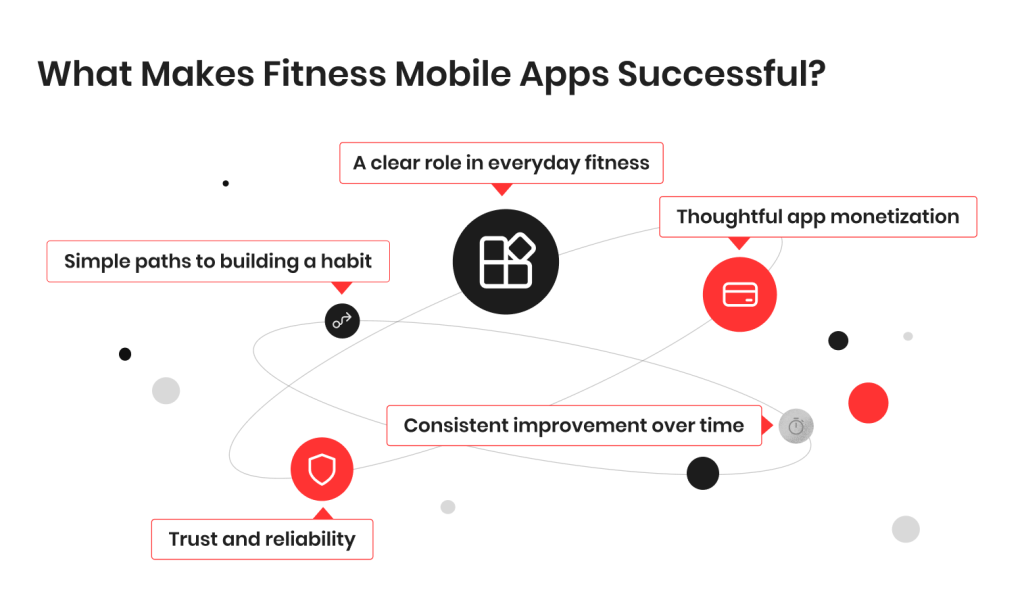
Successful fitness app development in 2026 takes more than a fresh idea and accurate execution. In order to succeed, a new product needs to be a good fit for the increasingly sophisticated requirements of the market and individual users. Here are the factors that can make your app stand out despite the competition.
A clear role in everyday fitness
Fitness apps that perform well usually have a clear place in daily routines. They help users do one or two things consistently, whether that is following workouts, tracking progress, or staying motivated. When the purpose is obvious, the app becomes part of a fitness journey rather than something that needs explanation. On the other hand, apps that try to cover every aspect of fitness often struggle to feel essential.
Simple paths to building a habit
Fitness apps are used in short moments. Opening the app, starting a workout, or checking progress should feel quick and predictable. Successful fitness apps remove unnecessary steps and let users focus on action rather than navigation. This simplicity is especially important for fitness apps that support daily or near-daily use.
Thoughtful app monetization
App monetization works best when it feels natural. Subscriptions, premium programs, or paid features tend to perform better when they are introduced gradually and connected to real value.
In successful fitness apps:
- Free access helps users build a habit first
- Paid options enhance progress rather than block it
- Pricing feels consistent with the experience
Clear app monetization models support sustainability without creating unnecessary complications.
Consistent improvement over time
Fitness apps that remain relevant continue improving after launch. This does not always mean adding new features. Often, it involves refining existing flows, adjusting fitness routines, or responding to how fitness app users actually behave. Small improvements made regularly tend to have more impact than large changes made rarely.
Trust and reliability
Fitness apps deal with personal data and daily habits. Stable performance, accurate tracking, and respectful data handling build trust over time. Once trust is lost, it is difficult to recover, especially within the fitness app industry, where excellent new apps come out every month.
Let’s build the next game changer for the fitness app industry

Final Thoughts
In 2026, fitness apps are less about novelty and more about usefulness. People will only return to the products that fit into real routines, respect limited time, and offer steady support rather than constant pressure. What stands out today is not who builds the biggest platform, but who builds something that’s in tune with what the audience needs.
The good news is that modern fitness app development makes it easier to experiment without committing to massive budgets or long timelines. At the same time, quality, security, and reliability still matter just as much as speed. This is why, in a market filled with options, fitness apps that work well tend to be the ones built with patience, focus, and a clear understanding of how people actually move, train, and stay motivated.
FAQ
 What makes a fitness app different from a general health and fitness app?
A fitness app usually focuses on workouts, routines, or physical progress, while a broader health and fitness app may include nutrition, sleep, or mental wellness as primary features.
Do fitness apps need to work with fitness trackers and smartwatches?
Not necessarily! Many fitness apps start without integrations. Fitness trackers and smartwatches become more important when tracking activity automatically is central to the fitness journey.
How long does it usually take to build a fitness app?
Development time depends on scope, but a focused fitness app with core features is often built within a few months. Clear priorities and a structured development process help avoid delays. Using AI tools for coding can also help create your fitness app faster while cutting the cost of development.
How much does it cost to build a fitness app?
The cost of developing a fitness solution is normally within the $50,000-$100,000 range, depending on the functionality, scalability requirements, interconnectivity with IoT and other devices, and platform compatibility. However, AI-assisted fitness app development services make it possible to develop a fully functional app for around $10,000.
Share:


- Key Takeaways
- Why Is Now the Perfect Time to Build a Fitness App?
- Creating a Fitness Application: From App Idea to a Successful Fitness Solution
- Key Types of Fitness Apps in 2026
- Core Fitness App Features to Consider
- Choosing the Right Mobile Approach to Create a Fitness App
- How to Develop a Fitness App: The Full Development Process
- Smarter Ways to Approach Fitness Application Development in 2026
- How Much Does It Cost to Build a Fitness App?
- App Store Readiness and Optimization: How to Make Your Product Shine in the Fitness App Market
- Common Mistakes in Fitness App Development
- What Makes Fitness Mobile Apps Successful?
- Final Thoughts
Planning to improve development process?
Decrease the entropy of product design and development, and increase your chances of success.
Written by



Hire a team
Let us assemble a dream team of specialists just for you. Our model allows you to maximize the efficiency of your team.


We Help With
Your tech partner needs to be well versed in all kinds of software-related services. As the software development process involves different stages and cycles, the most natural solution is to have them all performed by the same team of experts. That’s exactly what our diverse range of services is for.
The choice of technology for your software project is one of the defining factors of its success. Here at QArea, we have hands-on experience with dozens of popular front-end, back-end, and mobile technologies for creating robust software solutions.
In-depth familiarity and practical experience with key technologies are one of the cornerstones of successful software development and QA. But it also takes specific knowledge of the industry to develop a solution that meets the expectations of the stakeholders and propels its owner to success.


Ensure an effective online presence for your business with a corporate site.