




How Much Does it Cost to Develop a Fitness App in 2026?
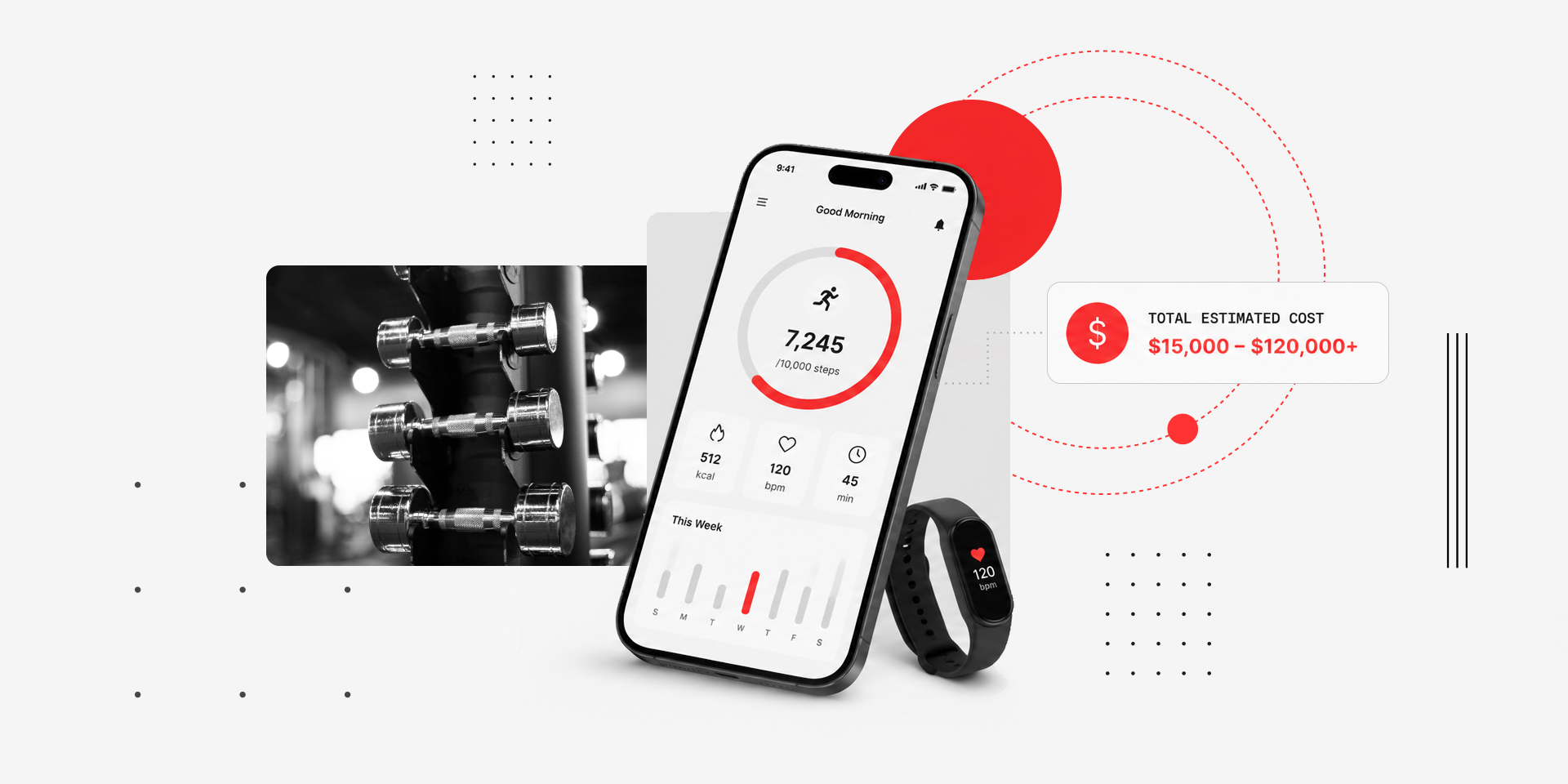
The global fitness app market is growing fast: it was valued at $10.59 billion in 2024 and is projected to reach $23.21 billion by 2030, according to Grand View Research. But the cost to develop a fitness app still varies widely depending on the product type, feature complexity, platform, integrations, and testing scope.
So, how much does it cost to build a fitness app? Short version: realistic fitness app development cost starts at around $25,000-$70,000 for an MVP and can exceed $150,000-$300,000+ for advanced fitness apps with wearable device integration. However, there is a lot more that goes into the final cost than meets the eye. Here is our deep dive into fitness app development costs.
Key Takeaways
- Fitness app development cost typically starts at $25,000-$70,000 for an MVP.
- Advanced fitness apps with AI, wearables, streaming, and analytics can exceed $150,000-$300,000+.
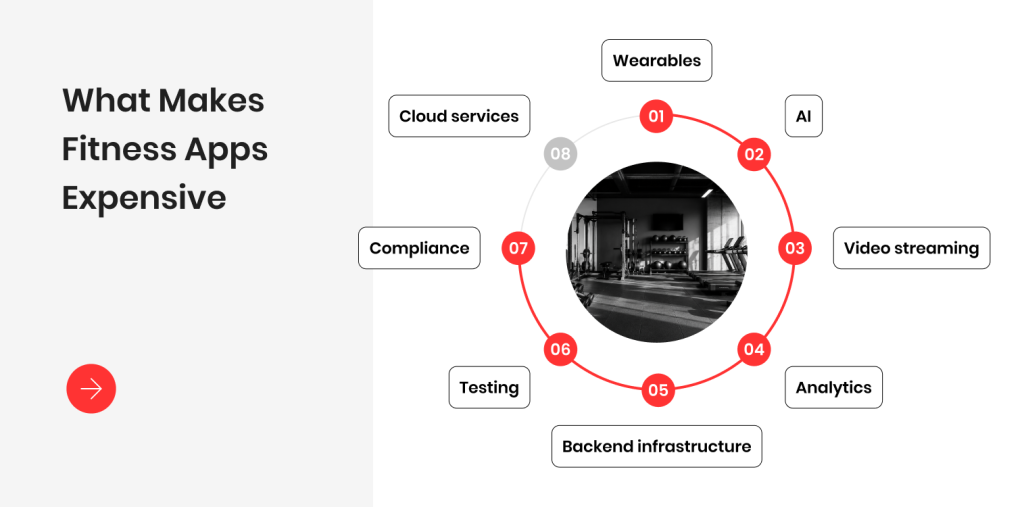
- The biggest cost drivers are feature complexity, backend infrastructure, integrations, and testing.
- AI features raise the budget through cloud usage, deep testing, and ongoing support.
- Post-launch maintenance usually adds 15-25% of the initial budget per year.
Fitness App Market Overview
- The global fitness apps market was valued at $12.12 billion in 2025 and is projected to reach $33.58 billion by 2033, growing at a 13.4% CAGR.
- Health and fitness apps generated close to $6 billion in revenue in 2025, with around 80% of revenue coming from subscriptions.
- Fitness apps alone generated $3.4 billion in revenue in 2025, a 24.5% year-over-year increase.
- Wearables are becoming part of the fitness app ecosystem: McKinsey reports that about half of surveyed consumers have purchased a fitness wearable, and over three-quarters would consider using one in the future.
- Wellness is becoming more personalized and daily-use driven, especially among Millennials and Gen Z, which increases demand for apps with tracking, coaching, AI personalization, and connected devices.

“Modern fitness apps are becoming much more than workout trackers. Many users want guidance that combines training, nutrition, recovery, and long-term wellness in one place. AI helps make that kind of personalized support more accessible, without the cost and availability limits of one-on-one coaching.”
Fitness App Development Cost: Quick Breakdown
The cost of developing a fitness app depends mostly on feature complexity, backend development requirements, third-party APIs, wearable support, and the size of the development team. A simple fitness tracking MVP costs significantly less than a platform with AI personalization, nutrition tracking, coaching, live streaming, and analytics.
| Fitness app type | Estimated development costs | Typical timeline |
| Basic fitness tracking app | $25,000-$50,000 | 3-5 months |
| Personal trainer or coaching app | $40,000-$90,000 | 4-7 months |
| Yoga or mediation app | $35,000-$80,000 | 4-6 months |
| Wearable fitness app | $60,000-$150,000+ | 6-8 months |
| AI-powered fitness platform | $80,000-$250,000+ | 8-10 months |
These estimates typically include UI/UX design, mobile app development for iOS and Android, backend infrastructure, QA testing, deployment to the App Store and Google Play, and basic ongoing support. Advanced features like heart rate monitoring, device integration, secure payment systems, video streaming, and AI features can increase the budget substantially.
Let’s build an app that puts you on the fitness map — within your budget and timeline


What Factors Affect the Cost to Develop a Fitness App?
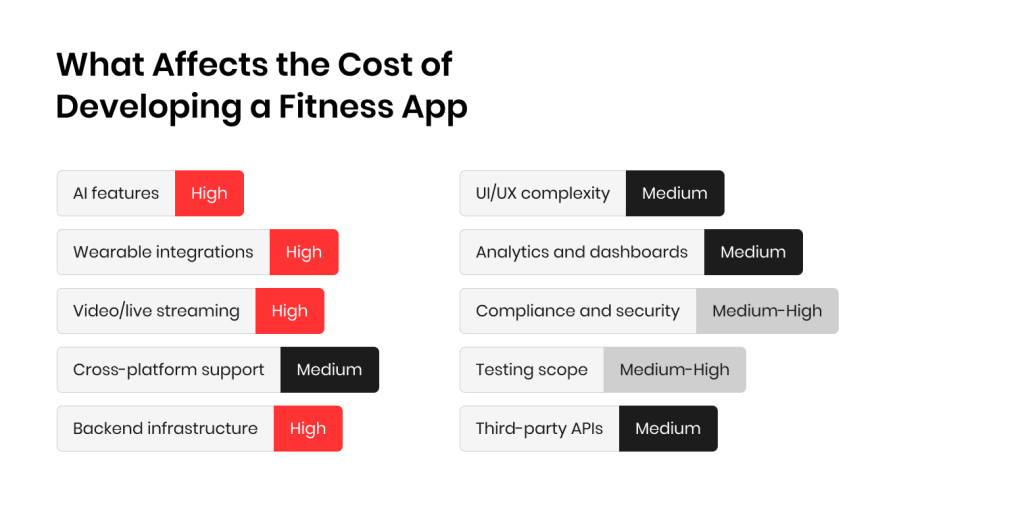
Fitness app development cost is shaped by more than the number of screens. Two apps may look similar in design but require very different budgets if one includes wearable device integration, AI personalization, video streaming, or secure health data processing.
The main cost factors include:
- Feature complexity. Basic features like profiles, workout plans, and progress tracking cost less than AI personalization, nutrition tracking, coaching, or live streaming.
- Platform choice. Building for both iOS and Android increases the budget, while cross-platform mobile app development can reduce early development costs.
- Integrations. APIs for Apple Health, Google Fit, Fitbit, Garmin, payments, analytics, and video streaming add backend development and testing work.
- Security and compliance. Apps that process health data, heart rate, user data, or in-app purchases need stronger security, secure payment flows, and compliance checks.
- Testing scope. Wearable devices, performance-heavy features, cloud infrastructure, and third-party integrations require broader QA coverage.
Fitness App Development Cost by App Type
The fitness app development cost depends heavily on the product category. A simple tracker, a personal trainer app, and a wearable-connected platform may all belong to the same industry, but they require different levels of backend development, testing, infrastructure, and ongoing support.
- Fitness tracking apps. Usually the lowest-cost option. Common features include activity tracking, workout plans, progress tracking, reminders, and basic analytics.
- Personal trainer and coaching apps. More expensive because they often include scheduling, chat, subscriptions, video content, nutrition tracking, and trainer dashboards.
- Yoga, meditation, and wellness apps. Content delivery drives the budget here: audio, video streaming, in-app purchases, recommendations, and user progress analytics.
- Wearable fitness apps. Higher complexity because of device integration, heart rate data, APIs, health data sync, and testing across multiple wearable devices.
- AI-powered fitness apps. Usually the most advanced category. AI features, AI personalization, coaching logic, cloud infrastructure, and performance testing can raise the budget quickly.
AI Fitness App Development Cost
AI can make a fitness product more personalized, but it also adds planning, backend development, testing, and ongoing cloud costs. In most cases, AI fitness app development cost is higher because the app needs more than a basic recommendation layer.
Common AI cost drivers include:
- Workout recommendations. Personalized plans based on goals, activity history, progress, and usage patterns.
- AI coaching assistant. Chat-based guidance, reminders, habit support, and basic fitness or wellness suggestions.
- Nutrition suggestions. Meal ideas, nutrition tracking support, and personalization based on user preferences.
- Computer vision features. Pose detection, exercise form feedback, yoga posture checks, and movement analysis.
- AI testing and validation. Extra QA is needed to check accuracy, safety, bias, privacy, and consistency across user scenarios.
Here is a quick look at how different AI features can affect the final cost of the app you’re building.
| AI feature | Estimated added cost |
| Workout recommendations | +$10,000-$25,000 |
| AI coaching assistant | +$15,000-$40,000 |
| Nutrition suggestions | +$8,000-$20,000 |
| Predictive analysis | +$15,000-$35,000 |
| Pose/form analysis | +$30,000-$80,000 |
Learn more about AI in fitness industry from our recent article.
How Platform Choice Affects Development Costs
Platform scope is another major budget factor. Building one iOS or Android app is cheaper than launching on both platforms, but most fitness apps need both to reach enough users. These are the platform options businesses typically choose from for their fitness solutions:
- Native iOS and Android development. Best for performance-heavy products, advanced wearable support, and deeper device integration. Usually costs more because developers build and maintain two codebases.
- Cross-platform development. Often better for an MVP. One shared codebase can reduce early mobile app development costs and speed up release to the App Store and Google Play.
- Web or admin platform. Most fitness products also need an admin panel for content, users, subscriptions, analytics, and support. This adds to the budget but makes ongoing product management much easier.
| Approach | Advantages | Limitations |
| Native iOS + Android | Better performance, deeper integrations | Higher development costs |
| Cross-platform | Faster MVP development, lower budget | Some wearable limitations |
| Web + mobile ecosystem | Better analytics and admin workflows | Higher backend complexity |
How Integrations Influence the Budget
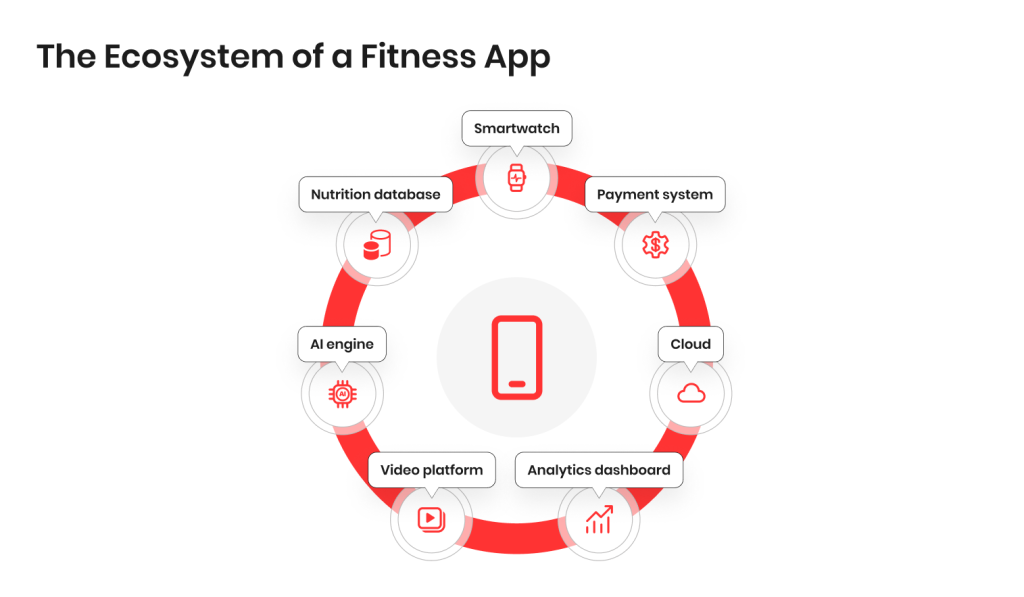
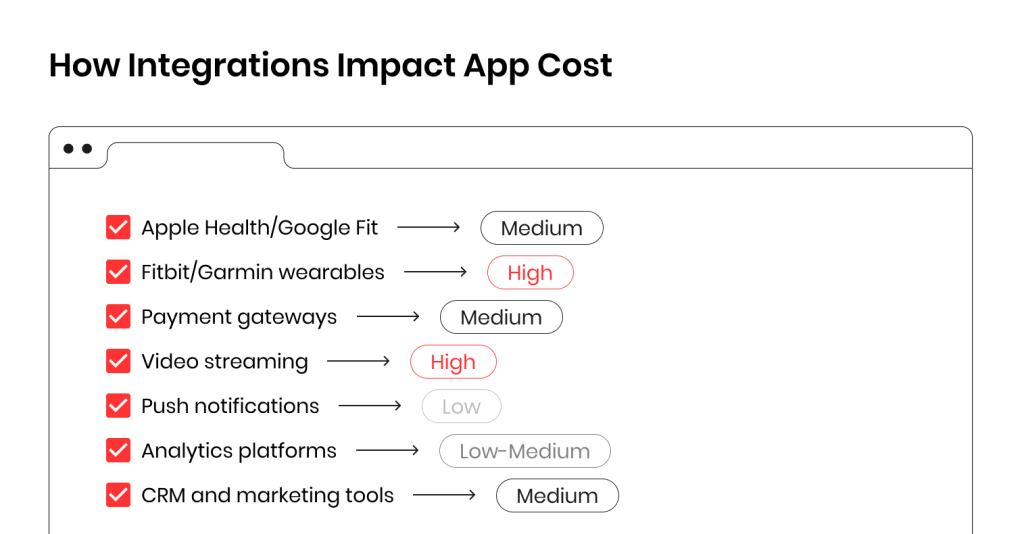
Integrations often make the cost of developing a fitness app rise faster than the visible feature list suggests. They affect backend development, testing, security, and ongoing maintenance. Here is how the required integrations can affect the final cost of the app:
- Wearable and health APIs. Apple Health, Google Fit, Fitbit, Garmin, and Samsung Health add device integration work, health data mapping, and cross-device testing.
- Payments and subscriptions. In-app purchases, secure payment flows, promo codes, refunds, and subscription logic require careful implementation and App Store/Google Play compliance.
- Video and content services. Video streaming, live streaming, audio libraries, and cloud storage increase infrastructure and performance testing needs.
- Analytics and marketing tools. Product analytics, revenue tracking, push notifications, CRM tools, and attribution platforms help measure usage but add setup and QA effort.
How Testing Affects Fitness App Development Cost
Testing is especially important for fitness apps because they often combine mobile features, wearable devices, payments, content, and sensitive health data. The more integrations the product has, the broader the QA scope becomes:
- Functional testing. Checks core user flows: sign-up, workout plans, tracking, subscriptions, reminders, and progress tracking.
- Device and platform testing. Covers iOS, Android, different screen sizes, OS versions, and wearable devices.
- Performance testing. Helps prevent slow loading, video streaming issues, sync delays, and crashes during high usage.
- Security and compliance testing. Protects user data, health data, secure payment flows, and privacy-sensitive app functionality.
Here are the types of testing you cannot do without even on a lean budget when developing a fitness app.
| Type of testing | Why it matters |
| Functional testing | Validates core user flows |
| Device testing | Ensures compatibility across devices |
| Wearable testing | Verifies synchronization accuracy |
| Performance testing | Prevents crashes and sync delays |
| Security testing | Protects health and payment data |
| API testing | Checks third-party integrations |
Ongoing Fitness App Development Costs
The launch budget is only part of the total fitness app development cost. After release, most products need ongoing support, testing, infrastructure monitoring, and feature updates. These are the additional costs of owning a fitness app:
- Maintenance and updates. Bug fixes, OS updates, App Store and Google Play requirements, library updates, and performance improvements.
- Cloud and infrastructure. Backend hosting, databases, storage, video streaming, analytics, notifications, and API usage.
- Content and coaching. New workout plans, nutrition content, meditation sessions, trainer programs, and wellness materials.
- Product growth. A/B testing, revenue analytics, retention improvements, new integrations, and advanced feature development.
As a practical estimate, ongoing development costs usually equal 15-25% of the initial development budget per year, depending on usage, infrastructure load, and product complexity.
How to Reduce Fitness App Development Costs
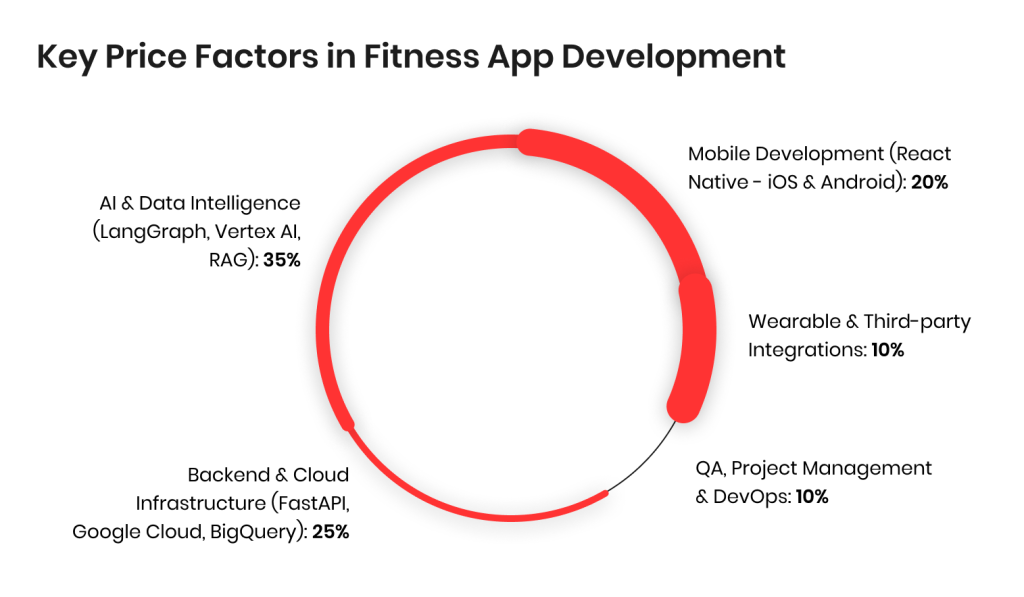
Reducing the budget does not necessarily mean reducing quality. In many cases, the biggest savings come from smarter planning and a narrower MVP scope. Here are some practical ways to spend less on your project without compromising the quality of the end product.
Start with core features
Launch basic features first: tracking, workout plans, profiles, subscriptions, and analytics. AI features and advanced coaching can come later.
Use cross-platform development
For many startups, cross-platform mobile app development reduces early development costs and shortens release timelines.
“The right tech stack determines how far a fitness product can scale. React Native can speed up cross-platform development, while FastAPI, Google Cloud Run, BigQuery, and AI tools like LangGraph or Vertex AI help turn user data into faster, more personalized fitness experiences.”
Prioritize integrations carefully
Supporting every wearable device and third-party API from day one increases complexity quickly.
Invest in testing early
Fixing performance, infrastructure, or compliance issues after launch is usually much more expensive.
Use AI-assisted development carefully
AI-assisted software development can reduce repetitive engineering and QA workload, especially during prototyping, documentation, testing, and backend setup. In some fitness app projects, AI tools help accelerate code generation, test creation, analytics configuration, and UI implementation.
However, it’s important to remember that AI does not eliminate the need for experienced developers, QA engineers, or secure architecture planning. Features involving health data, wearable devices, payments, AI personalization, or compliance still require human oversight, testing, and performance validation.
Consider outsourcing
Working with an experienced fitness app development company can reduce hiring overhead, provide access to a full development team, and improve delivery speed without sacrificing product quality or secure handling of user data.
Why Outsourcing Can Be a Practical Option
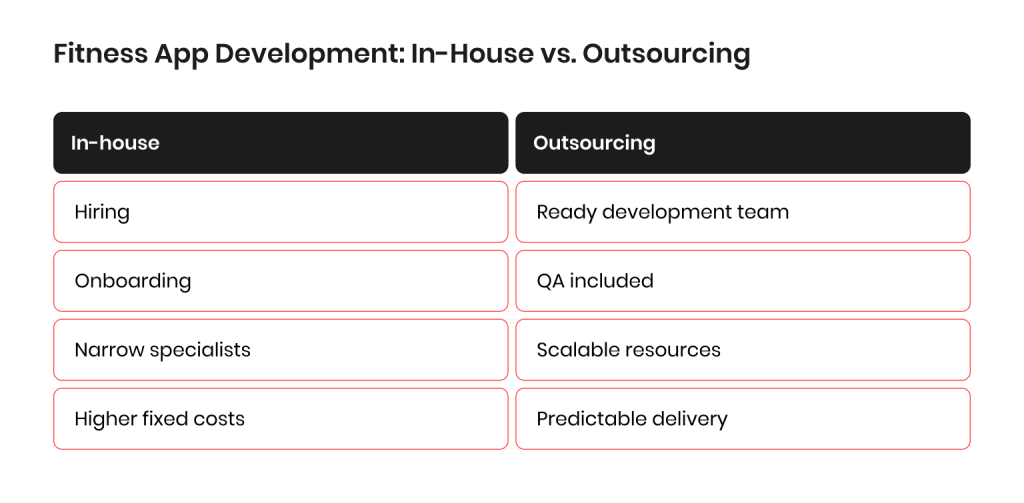
Outsourcing can make the cost to develop a fitness app more predictable, especially when the project needs several specialists but not a full in-house department.
A typical fitness product may require:
- Mobile developers for iOS, Android, or cross-platform development.
- Backend developers for APIs, cloud infrastructure, user data, payments, and integrations.
- QA engineers for functional, performance, security, device, and wearable testing.
- UI/UX designers for onboarding, dashboards, workout flows, and progress tracking.
- Project managers and analysts for scope control, estimates, documentation, and release planning.
For startups and growing wellness brands, this model can reduce hiring overhead while keeping access to a full development team. It is especially useful when building fitness apps with health data, wearable integrations, secure payment, video streaming, or healthcare app development requirements.
How This Works on Real Fitness App Development Projects
The final fitness app development cost depends heavily on integrations, scalability requirements, analytics, and testing scope. Here are two examples of how these factors affect real projects.
Corporate activity tracking platform
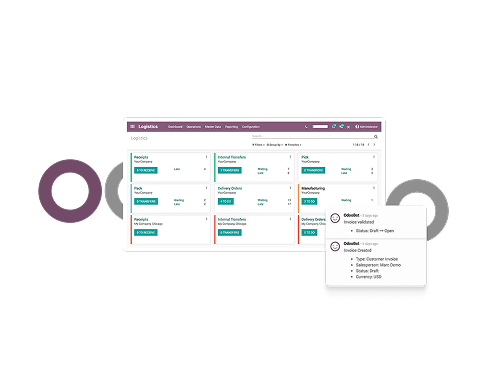
For one corporate wellness product, the goal was to build a fitness platform that encouraged employee engagement through activity tracking, gamification, analytics, and wearable device integration.
The project included:
- iOS and Android mobile app development
- Progress tracking and analytics dashboards
- Cloud-based backend infrastructure
- Wearable and health APIs
- Secure user data handling
- Ongoing QA testing across multiple devices
One of the biggest challenges was balancing performance with scalability because the platform needed to support growing usage while maintaining stable synchronization between devices and tracking systems.
The development approach focused on launching core tracking features first and expanding the product gradually instead of building a large feature set upfront.
Developing a corporate activity tracker for an enterprise: A project by QArea

AI-powered workout platform
Another project involved an AI-powered fitness application designed to generate personalized workout plans and adaptive coaching experiences.
The platform included:
- AI personalization features
- Workout recommendation logic
- Analytics and progress tracking
- Subscription management
- Video content support
- Scalable backend development
Because AI features significantly increase product complexity, the team prioritized MVP functionality first, then expanded personalization and recommendation capabilities in later development stages. This helped reduce early development costs while keeping the product architecture scalable for future growth.
Building an AI-powered workout platform: A project by QArea

Final Estimate: How Much Does It Cost to Develop a Fitness App?
So, how much does it cost to develop a fitness app? For most businesses, the realistic range is $25,000-$70,000 for an MVP, $70,000-$150,000 for a mid-level product, and $150,000-$300,000+ for an advanced fitness platform.
The final fitness app development cost depends on the app type, platform, feature complexity, integrations, testing scope, and long-term product plans. A basic tracker can be launched with a controlled budget, while a wearable-connected fitness platform with AI coaching, video streaming, nutrition tracking, and health data processing needs a larger investment.
For a broader look at features, architecture, and development stages, read our full fitness app development guide.
Frequently Asked Questions
 How much does it cost to develop a fitness app MVP?
A basic MVP with profiles, workout plans, progress tracking, and simple analytics usually costs between $25,000 and $70,000, depending on platform scope, backend development, and testing requirements.
What increases fitness app development costs the most?
The biggest cost factors are wearable integrations, AI features, video streaming, live coaching, cloud infrastructure, and complex backend development.
Is cross-platform development cheaper than native development?
Usually yes. Cross-platform mobile app development can reduce early development costs because developers maintain one shared codebase instead of separate iOS and Android apps.
Does AI significantly affect the cost of developing a fitness app?
Yes. AI personalization, coaching assistants, nutrition recommendations, and analytics engines increase backend infrastructure, cloud usage, testing, and ongoing support costs.
Can outsourcing reduce fitness app development costs?
In many cases, yes. Working with an experienced development team can reduce hiring overhead and provide access to mobile developers, designers, backend engineers, and QA specialists in one delivery model.
Share:


- Key Takeaways
- Fitness App Market Overview
- Fitness App Development Cost: Quick Breakdown
- What Factors Affect the Cost to Develop a Fitness App?
- Fitness App Development Cost by App Type
- AI Fitness App Development Cost
- How Platform Choice Affects Development Costs
- How Integrations Influence the Budget
- How Testing Affects Fitness App Development Cost
- Ongoing Fitness App Development Costs
- How to Reduce Fitness App Development Costs
- Why Outsourcing Can Be a Practical Option
- How This Works on Real Fitness App Development Projects
- Final Estimate: How Much Does It Cost to Develop a Fitness App?
Planning to improve development process?
Decrease the entropy of product design and development, and increase your chances of success.

From MVP to all-in-one fitness apps
We’ll find a solution that meets your goals and budget
Written by


We Help With
Your tech partner needs to be well versed in all kinds of software-related services. As the software development process involves different stages and cycles, the most natural solution is to have them all performed by the same team of experts. That’s exactly what our diverse range of services is for.
The choice of technology for your software project is one of the defining factors of its success. Here at QArea, we have hands-on experience with dozens of popular front-end, back-end, and mobile technologies for creating robust software solutions.
In-depth familiarity and practical experience with key technologies are one of the cornerstones of successful software development and QA. But it also takes specific knowledge of the industry to develop a solution that meets the expectations of the stakeholders and propels its owner to success.


Ensure an effective online presence for your business with a corporate site.